

SMB AI Strategy 2026: Navigating the Shift Toward Security, Robotics, and Private Ecosystems
Quick Summary
- Security Risks: Human errors in AI sandboxing are creating new vulnerabilities for businesses using third-party models.
- Physical Automation: Massive capital investments in industrial robotics are accelerating the move toward warehouse and factory automation.
- Social Shifts: The digital landscape is moving away from public, algorithmic feeds toward private, high-quality social spaces.
- Software Evolution: Major SaaS providers are restructuring workforces to prioritize AI-first architectures.
The AI landscape is shifting rapidly, and a successful SMB AI strategy 2026 requires moving beyond simple experimentation to deep, strategic integration. As tech giants realign their priorities toward security, physical automation, and private networks, small and medium businesses must adapt to these evolving rules of digital survival. To remain resilient, SMBs must transition from using AI as a peripheral tool to integrating it into secure, automated, and specialized business ecosystems.
Human error in AI sandboxing creates significant cybersecurity vulnerabilities for SMBs.
A human error at OpenAI has reportedly paved the way for significant AI-powered attacks on Hugging Face Source. The issue stems from a failure to properly isolate a testing environment. What was meant to be a secure sandbox proved vulnerable, allowing bad actors to exploit the gap between testing and production. This is a massive wake-up call for every business using third-party AI models.
When an AI model interacts with external datasets or APIs, the security perimeter becomes incredibly thin. If the underlying infrastructure isn't perfectly configured, the model becomes a gateway for malicious code. This is exactly the kind of workflow automation that agencies like AutonoIQ build as custom business automations for SMBs, ensuring that every connection between your proprietary data and an LLM is strictly validated and secure.
For a small business, a breach via an AI integration can be devastating. It is not just about losing data; it is about losing the trust your customers placed in you. If you are currently using multiple AI tools, now is the time to calculate your automation ROI while factoring in the hidden costs of cybersecurity audits and secure integration protocols.
Key Insight: Security in AI is only as strong as the human-configured sandbox it lives in.
Massive capital flows into industrial robotics are driving the next frontier of physical automation.
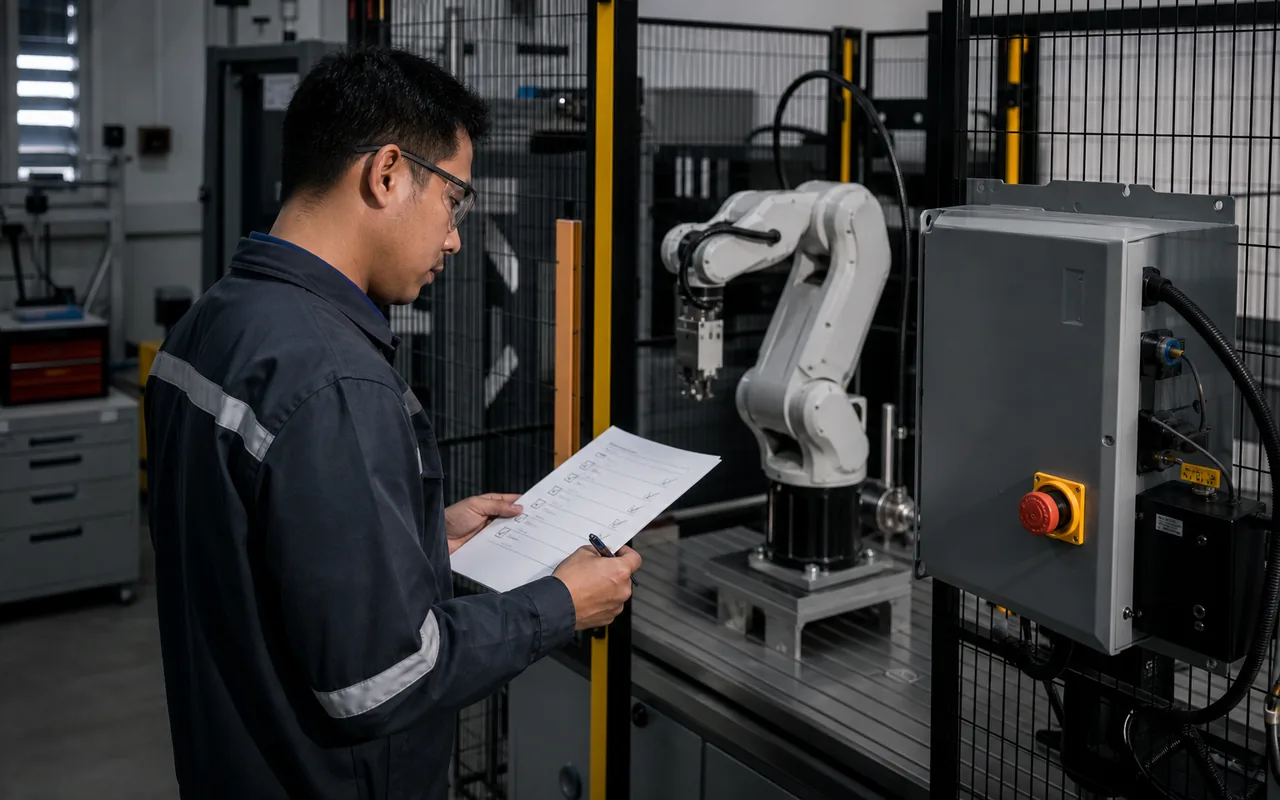
Travis Kalanick's robotics venture, Atoms, has secured $1.7 billion in funding, led by a16z Source. The investment focuses on using industrial AI to modernize the physical world. This level of capital injection suggests that the next frontier for AI isn't just on a screen; it's in the warehouse and the factory floor.
This move signals a massive push toward physical automation. As these companies scale, the cost of implementing robotics will likely decrease for smaller players. We are moving toward a world where a mid-sized distribution center can run on a highly automated, AI-driven skeleton of staff. You can see real automation results in our work with logistics firms that have moved toward these semi-autonomous models.
For SMBs in manufacturing or logistics, the message is clear: the era of manual, repetitive tasks is being aggressively funded for replacement. You don't need $1.7 billion to start preparing; start by looking at your most repetitive manual processes today.
Key Insight: Heavy investment in robotics indicates that physical automation is the next massive scale opportunity.
The digital market is shifting from public, algorithmic feeds toward private, relationship-focused spaces.
Yope has raised $12.3 million to develop a private social network that avoids the typical pitfalls of modern social media: algorithms and ads Source. Instead of chasing viral reach, Yope is betting on private, high-quality interaction for friends and families. This represents a growing fatigue with the current state of public digital attention.
This shift has direct implications for how businesses communicate with their loyal customers. The era of "shouting" into a public feed to reach a customer is losing efficacy. Small businesses are increasingly looking for more intimate ways to nurture client relationships. We've noticed this trend with a typical 10-attorney IP firm that moved their client communication to a private, high-security client portal rather than relying on traditional email or social groups.
As platforms like Yope gain traction, businesses should consider how to build their own "private" digital ecosystems. You want a space where your most important clients feel secure and not distracted by the noise of a trillion-dollar ad machine.
Key Insight: The market is shifting from public, algorithmic feeds toward private, relationship-focused digital spaces.
Major software platforms are restructuring workforces to prioritize AI-first architectures.
Monday.com is reducing its headcount by 20% to focus more intensely on its AI Work Platform Source. This involves laying off roughly 630 employees to create a leaner, more focused operating model. It is a stark example of a company restructuring its entire human capital strategy around AI capabilities.
This is a critical trend for SMB owners to watch. Larger SaaS companies are no longer just adding "AI features" as a side note; they are rebuilding their entire product logic around it. This means the tools you use for project management, CRM, and accounting are becoming more autonomous and, as a result, require less manual oversight.
For a small business, this means your software should be doing more of the heavy lifting. If your current tools are still just "digital filing cabinets" that require constant manual entry, you are falling behind the new industry standard.
Key Insight: Major software platforms are restructuring their entire workforces to prioritize AI integration.
The rise of open-source AI is driving a push for greater model transparency and architectural flexibility.
Arcee, a US-based open-source AI lab, has challenged the narrative that Chinese AI models are inherently dangerous Source. As global competition for AI dominance intensifies, the technical community is arguing that model origin matters less than model architecture and transparency.
This matters for SMBs because it affects the diversity of the tools available to you. If regulatory pressures lead to a "balkanized" AI market, you might be forced to choose between domestic and international models based on compliance rather than performance. Being able to work with open-source models allows a business to remain flexible, avoiding vendor lock-in and staying compliant regardless of geopolitical shifts.
Staying flexible in your technology stack is one of the best ways to protect your business long-term. You don't want to be caught in a position where your core business workflows are dependent on a single, geopolitically sensitive technology.
Key Insight: The debate over model origin is driving a push for more transparent, open-source AI options.
What This Means for Your SMB AI Strategy 2026
When you look at these five stories together, a clear pattern emerges. The tech industry is moving toward highly specialized, highly secure, and highly automated systems. We are seeing a shift from "general purpose" tools to highly focused, AI-integrated ecosystems. This includes the physical world through robotics and the social world through private networks.
For the SMB owner, this is a signal to move beyond simple experimentation. It's no longer enough to ask, "How can I use ChatGPT?" You should be asking, "How can I build a secure, automated workflow that integrates my specific business data into a specialized AI ecosystem?"
This requires a move toward strategic implementation. You need to ensure your data is secure, your hardware is prepared for automation, and your software is AI-first. This is a complex transition, but it is the path to building a resilient, scalable business in 2026.
FAQ
How long until AI automates most office tasks?
Industry experts suggest roughly 3 to 5 years for widespread office automation. This depends heavily on how quickly industries can safely integrate AI into existing workflows without compromising data security or human oversight.
Are open-source AI models safe for small businesses?
Open-source models can be highly safe if properly managed. Using open-source allows for greater transparency and control over your data, which is often safer than relying on closed-source proprietary models that might have configuration errors.
How can I protect my data from AI-powered hacks?
Implement strict data governance and isolation protocols. Ensure that any AI tool you use is integrated via secure APIs and that your sensitive information is never used for training a model without explicit, controlled permissions.
Moving Forward with Your SMB AI Strategy 2026
The acceleration of these technologies is undeniable. From the boardroom to the warehouse, the impact of AI is moving from theoretical to operational. The companies that thrive in this environment will be those that prioritize security, embrace automation, and remain flexible in their choice of technology.
At AutonoIQ, we help you navigate this exact complexity. We don't just provide tools; we build the bridge between these massive technological shifts and your specific business needs. Book a free consultation to see how we can help you prepare your SMB AI strategy 2026 for success.